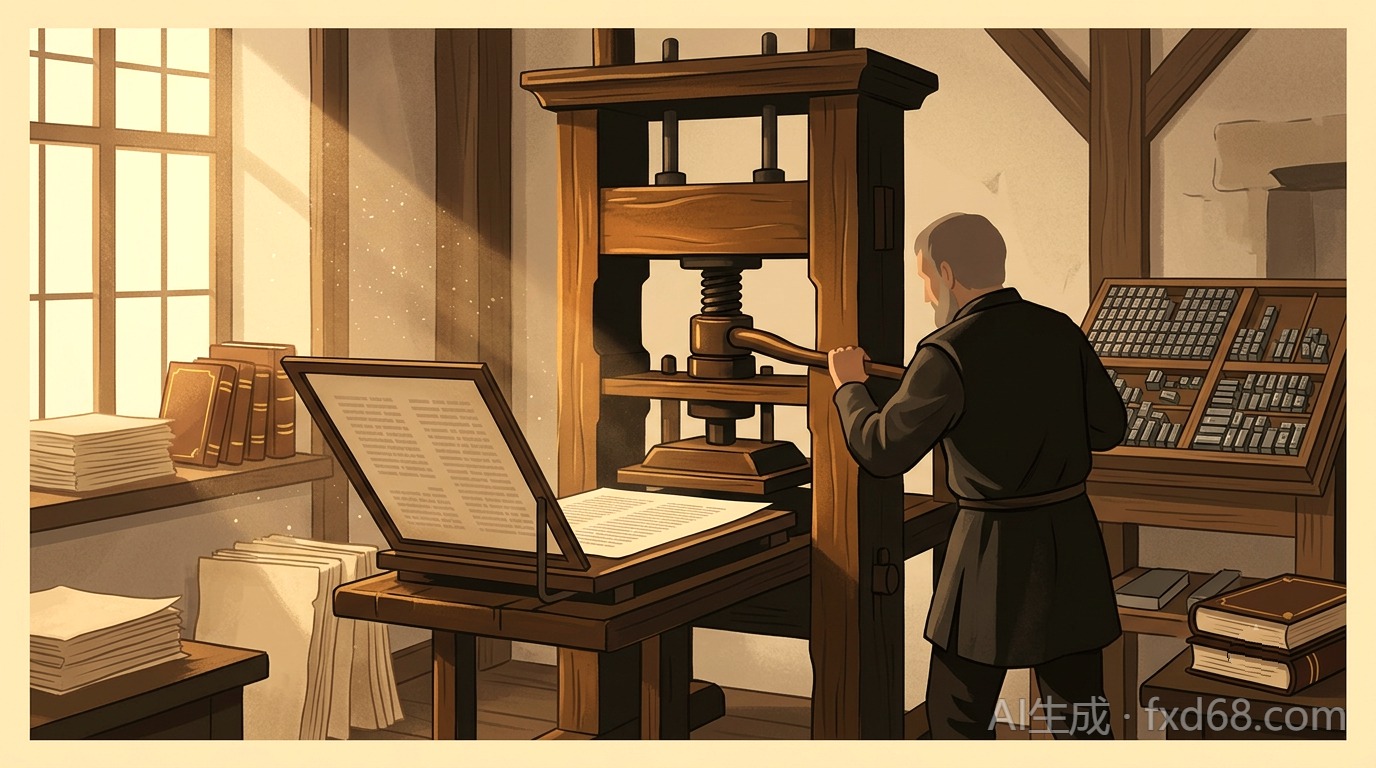
15世纪之前,欧洲的书籍全靠手抄,一位抄写员往往要花上几个月甚至几年,才能抄完一本书。因此书籍极其昂贵稀有,只有教会和极少数贵族才买得起,普通人一辈子可能都摸不到一本书。在德国美因茨,一位名叫约翰内斯·古腾堡的金匠,却在思考一个大胆的问题——能不能造一种机器,让文字像盖印章一样被"印"出来,而不是一笔一划地抄?
Before the 15th century, books in Europe were copied entirely by hand. A single scribe might spend months, or even years, copying just one book. As a result, books were extremely rare and expensive, affordable only to churches and a handful of nobles, while ordinary people might never touch a book in their entire lives. In Mainz, Germany, a goldsmith named Johannes Gutenberg was pondering a bold question: could a machine be built to print words the way a seal stamps an image, instead of copying them by hand, one stroke at a time?
古腾堡的灵感,竟然来自一台再普通不过的葡萄酒压榨机。他把每一个字母铸成单独的金属块,蘸上油墨,用改造后的压榨机使劲一压,一页整齐的文字就印在了纸上。这个看似简单的想法,最终彻底改变了整个欧洲。
Gutenberg's inspiration came, surprisingly, from an ordinary wine press. He cast each letter as its own metal block, coated it with ink, and pressed hard using his modified press machine, producing a full page of neatly printed text. This seemingly simple idea would ultimately transform all of Europe.
📜 一台压葡萄酒的机器,却悄悄改变了整个欧洲——它到底做了什么?
付费解锁完整故事 · 古腾堡圣经的诞生 · 趣味词卡
- 🀄 毕昇活字印刷点击进入
- 📜 古腾堡印刷术本期 · NOW
- 🔥 破釜沉舟点击进入
- 🌿 巴德尔之死点击进入
- ⚔️ 瓦尔基里点击进入