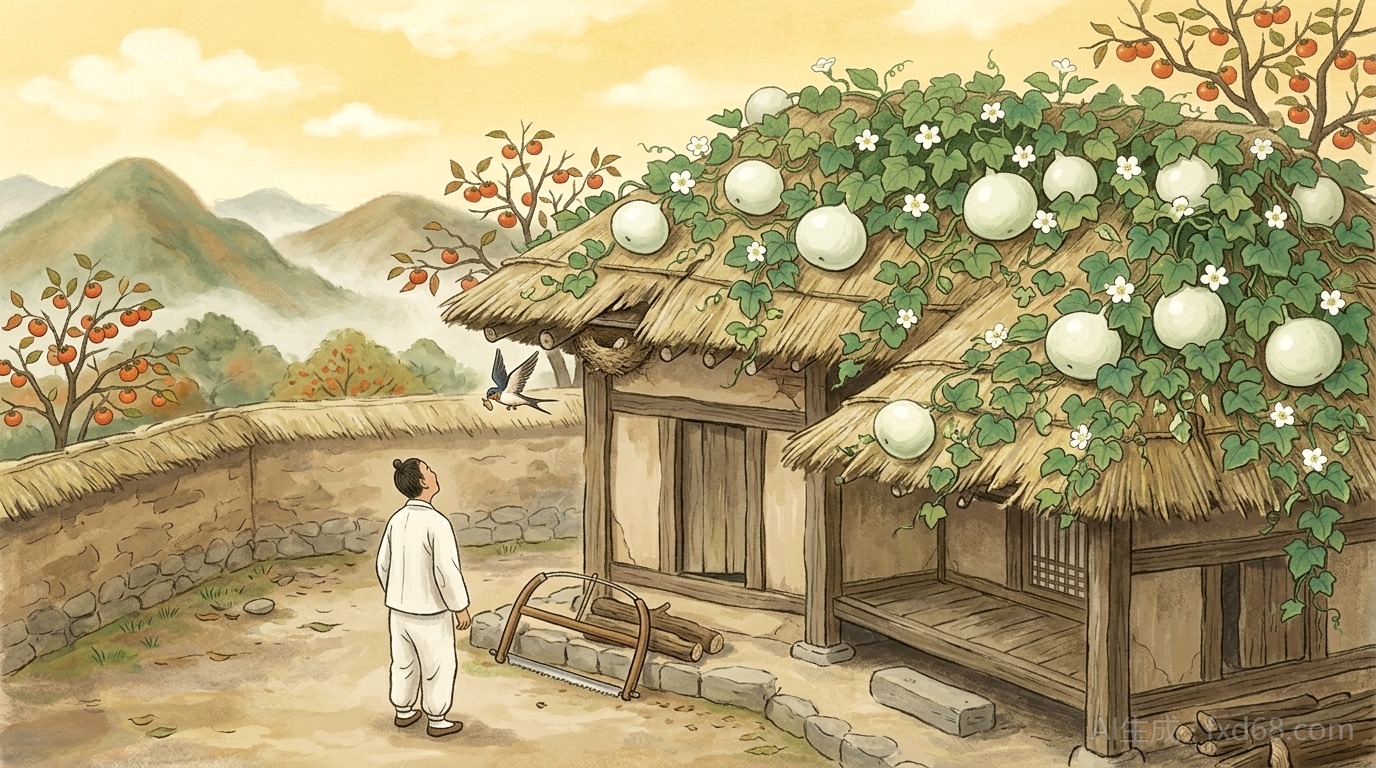
《兴夫与孬夫》是韩国家喻户晓的民间故事,韩语叫《흥부전》(兴夫传),在朝鲜王朝后期已经广为流传。它还被编成了韩国传统说唱艺术"盘索里"的曲目《兴夫歌》:只需一位歌手和一位鼓手,歌手一个人又说又唱,扮演故事里所有的角色,能一口气表演好几个小时。
Heungbu and Nolbu is a folktale every Korean knows; in Korean it is called Heungbu-jeon (The Tale of Heungbu), and it was already widely told in the late Joseon dynasty. It was also turned into Heungbu-ga, a piece of pansori, Korea's traditional art of sung storytelling. All it takes is one singer and one drummer: the singer speaks and sings every character in the story alone, and can perform for several hours at a stretch.
《兴夫歌》是今天仍在演出的五部经典盘索里之一。2003年,盘索里被联合国教科文组织宣布为"人类口头和非物质遗产代表作"。直到今天,在韩国的剧场和学校里,还能听到艺人们唱起兴夫和小燕子的故事。
Heungbu-ga is one of the five classic pansori works still performed today. In 2003, UNESCO proclaimed pansori a Masterpiece of the Oral and Intangible Heritage of Humanity. Even now, in Korean theaters and schools, you can still hear performers singing the story of Heungbu and the little swallow.
🍈 第一百六十九个故事,一只受伤的小燕子,一颗葫芦种子,和一对性格完全相反的兄弟
付费解锁完整故事 · 完整情景对话 · 趣味词卡
- 🍈 兴夫与孬夫本期 · NOW
- 🐐 三只山羊嘎啦嘎啦点击进入
- 🐑 亡羊补牢点击进入
- 🐊 猴子与鳄鱼点击进入
- 🍉 西瓜的传说点击进入