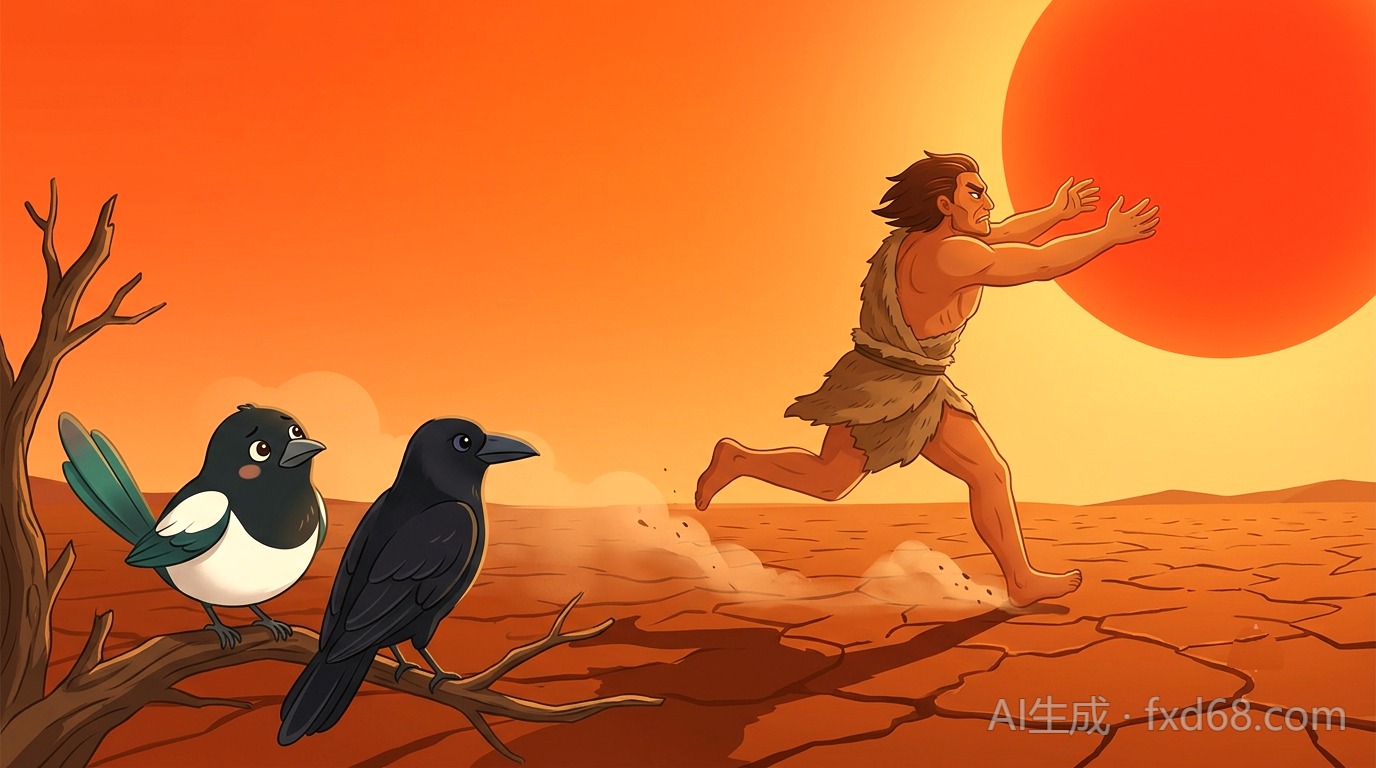
夸父追日出自《山海经·海外北经》:夸父与太阳赛跑,追到禺谷时口渴难忍,喝干黄河、渭水仍不解渴,转身奔向北方大泽,却在半路渴死。临死前,他将手中木杖抛出,化作一片桃林,为后来的行人遮荫解渴。
Kuafu Chasing the Sun comes from the Classic of Mountains and Seas: Kuafu raced the sun, grew thirsty near Yugu, drank the Yellow River and Wei River dry, and died of thirst on his way to a northern lake. Before he died, he threw down his staff, which became a peach forest offering shade to later travelers.
夸父追日常被视为"知其不可而为之"的悲壮寓言——他从一开始就不可能追上太阳,却从未停下奔跑。这与同样出自《山海经》的精卫填海一脉相承:两者拼尽全力对抗的都不是能否获胜,而是绝不放弃本身,是中国神话里最悲壮动人的母题之一。
Kuafu Chasing the Sun is often read as a tragic parable of persisting even when success is impossible, he could never catch the sun, yet he never stopped. It echoes Jingwei Filling the Sea, also from the same text: victory was never the point, what mattered was refusing to give up, a recurring theme in Chinese mythology.
🏃 一场注定追不上的赛跑——
当夸父真的倒下的那一刻,小喜才明白,阿鸦说的"执着"到底是什么意思。
付费解锁完整故事 · 夸父的抉择 · 趣味词卡
- 🌊 奥德赛漂流点击进入
- 🏃 夸父追日本期 · NOW
- ⚡ 雷神的两个传说点击进入
- 🦋 梁山伯与祝英台点击进入
- ⚡ 诸神黄昏点击进入
- 🐺 阿努比斯与死亡点击进入
- 🌊 波塞冬与海洋点击进入
- 🐍 美杜莎与珀尔修斯点击进入