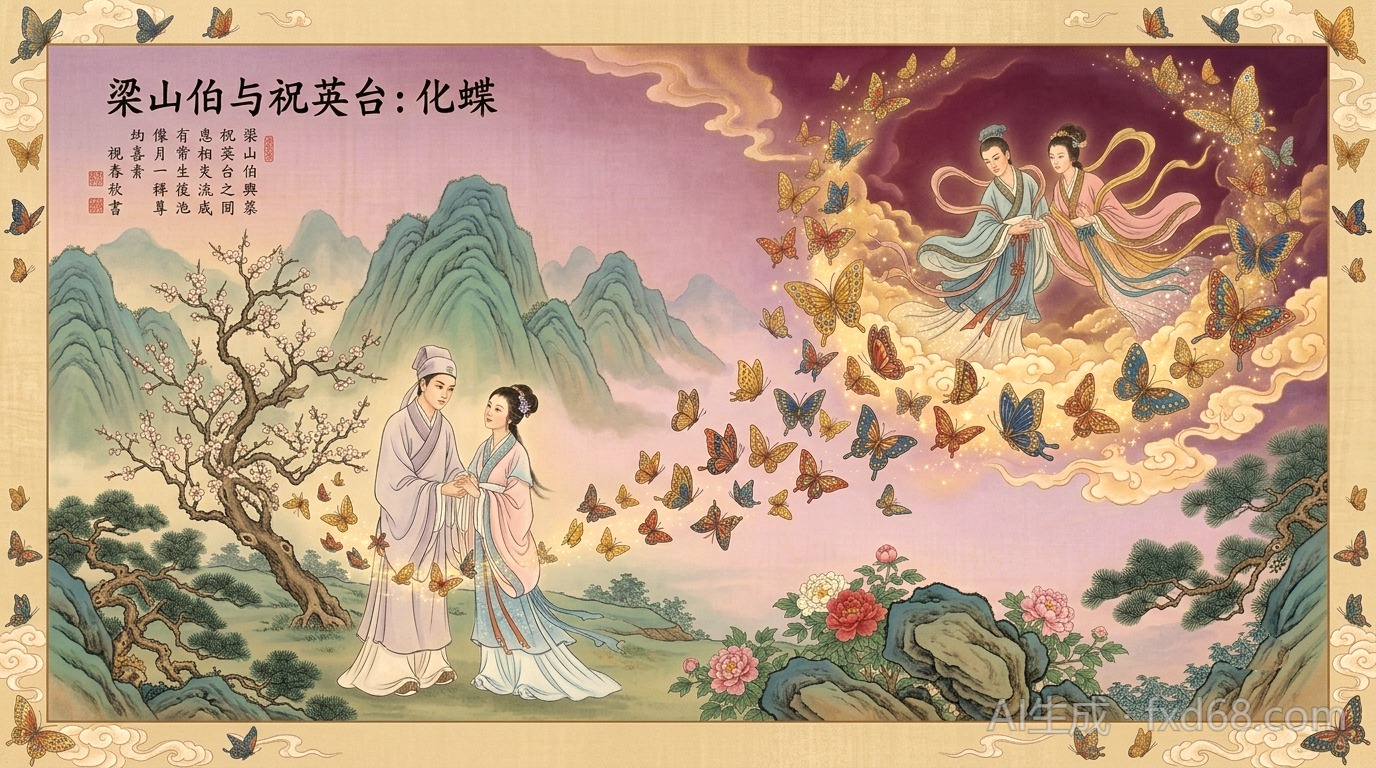
梁祝"化蝶"的结局,并非单纯的浪漫想象——在中国文化里,蝴蝶自庄子"庄周梦蝶"起,就象征着生死界限的消融与灵魂的自由超脱。梁祝二人无法在人间结合,死后却化作双蝶翩然起舞,正是用最柔美的意象,完成了对礼教束缚最决绝的反抗。
The "butterfly transformation" ending of Liang and Zhu is more than poetic fantasy — in Chinese culture, ever since Zhuangzi's "Butterfly Dream," butterflies have symbolized the dissolving of boundaries between life and death and the soul's ultimate freedom. Unable to be together in life, the two lovers become a pair of butterflies after death, using the gentlest of images to stage the most defiant rebellion against feudal constraints.
有趣的是,同样是化蝶,中国的梁祝故事强调"双飞不离",寄托的是团圆与永恒的爱情;而西方文化里蝴蝶(psyche一词本义即"灵魂")更多象征灵魂本身的蜕变与重生。一场悲剧,两种化蝶,却道出了东西方对"永恒"截然不同的想象方式。
Interestingly, while both involve butterfly transformation, the Chinese story of Liang and Zhu emphasizes "flying together, never apart" — a symbol of reunion and eternal love. In Western culture, however, the butterfly (the Greek word "psyche" itself means "soul") more often represents the soul's own transformation and rebirth. One tragedy, two very different visions of what it means to become eternal.
🦋 三年同窗,一世错过——
当梁山伯终于知道真相,一切是否已经太迟?
付费解锁完整故事 · 十八相送 · 化蝶双飞 · 趣味词卡
- 🦋 梁山伯与祝英台本期 · NOW
- ⚡ 雷神的两个传说点击进入
- ⚡ 诸神黄昏点击进入
- 🐺 阿努比斯与死亡点击进入
- 🌊 波塞冬与海洋点击进入
- 🐍 美杜莎与珀尔修斯点击进入