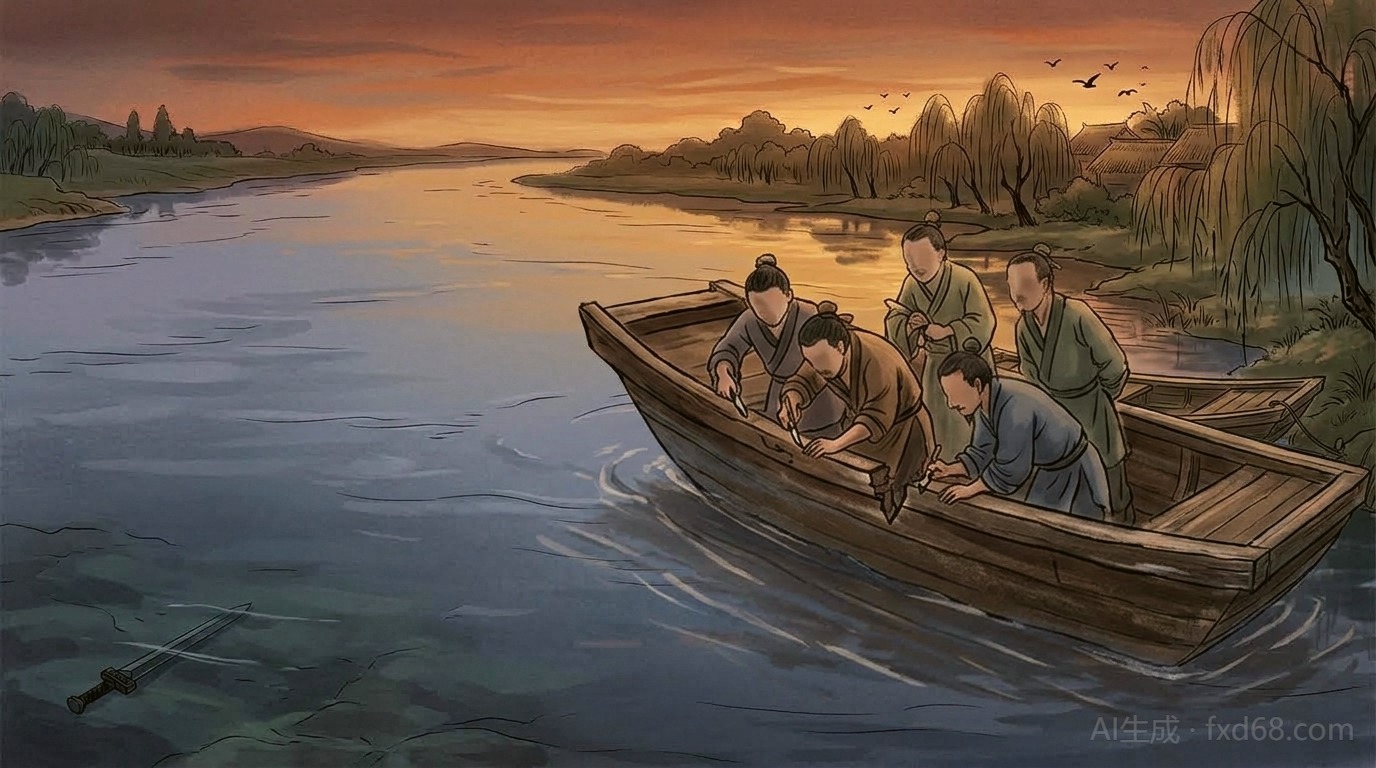
《刻舟求剑》出自《吕氏春秋·察今》,这是战国末年秦国丞相吕不韦招揽门客集体编撰的一部著作。故事讲一个楚国人乘船渡江,佩剑不小心掉进水里,他立刻在船舷上刻下记号,说"我的剑就是从这里掉下去的";等船靠岸后,他才从刻记号的地方跳下水去找剑,结果自然什么也没找到,因为船早已经离开剑落水的地方很远了。这个成语从此用来讽刺那些不懂得随情况变化而变通、只会死守老办法的人。
"Marking the Boat to Find the Sword" comes from the "Cha Jin" chapter of Lü's Spring and Autumn Annals, a work compiled by retainers gathered under the sponsorship of Lü Buwei, chancellor of the state of Qin near the end of the Warring States period. The story tells of a man from Chu crossing a river by boat when his sword accidentally fell overboard. He immediately carved a mark on the side of the boat and said, "This is exactly where my sword fell." When the boat reached the shore, he jumped into the water at the marked spot to search for it — and of course found nothing, since the boat had long since drifted far from where the sword had actually landed. The idiom has been used ever since to mock people who stubbornly stick to old methods without adapting to changing circumstances.
⚔️ 第一百五十四个故事,一把找不回来的剑
付费解锁完整故事 · 完整情景对话 · 趣味词卡
- ⚔️ 刻舟求剑本期 · NOW
- 🧺 小红帽点击进入
- 🐍 画蛇添足点击进入
- 👠 灰姑娘点击进入
- 🏹 草船借箭点击进入