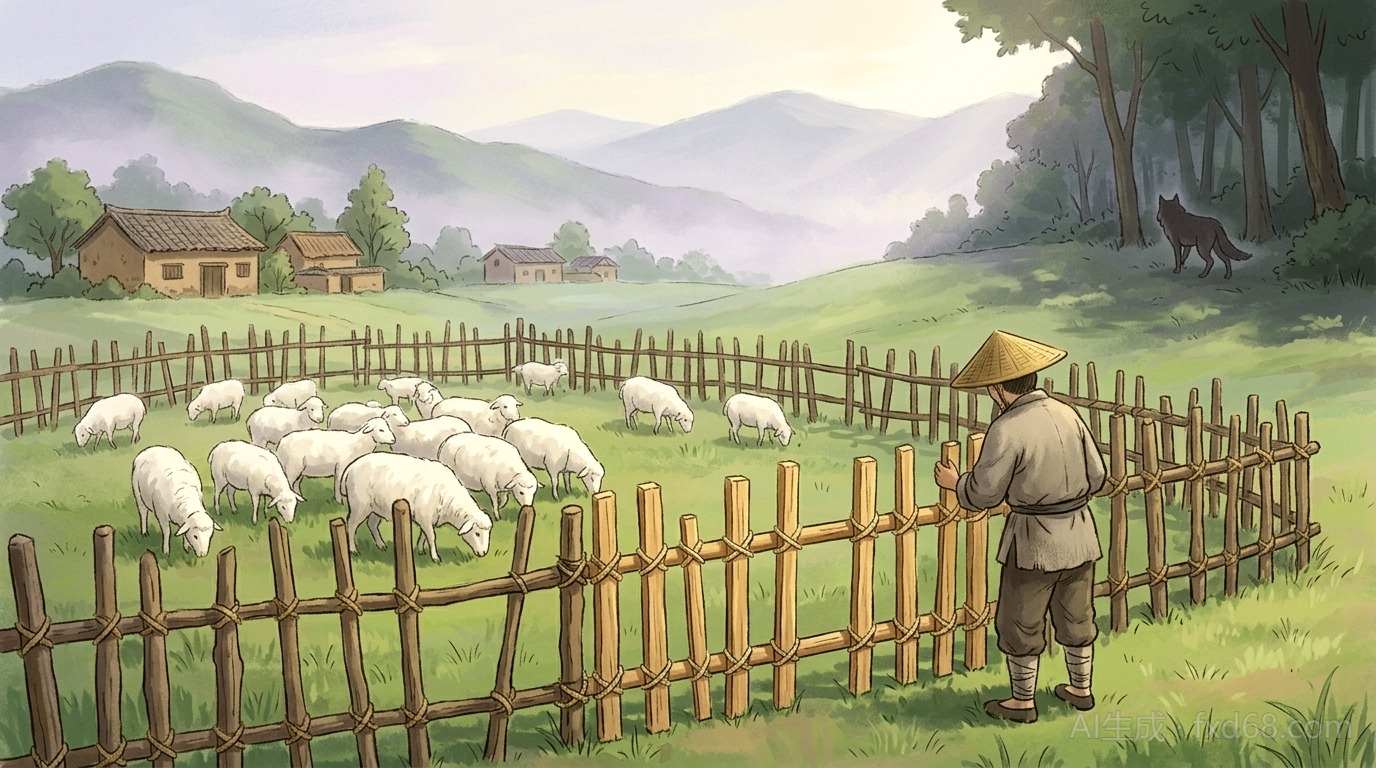
《亡羊补牢》出自西汉刘向编订的《战国策·楚策》。原文里其实没有牧羊人,讲的是一位名叫庄辛的大臣劝谏楚襄王的事。楚王起初不听劝告,后来吃了大亏,才后悔地把庄辛请了回来。庄辛没有责怪他,而是说了一句:"见兔而顾犬,未为晚也;亡羊而补牢,未为迟也。"意思是:看见了兔子再回头叫猎狗,还不算晚;丢了羊再去修补羊圈,也不算迟。
This idiom comes from the Strategies of the Warring States, compiled by Liu Xiang in the Western Han dynasty. The original text has no shepherd at all — it tells of a minister named Zhuang Xin advising King Xiang of Chu. At first the king ignored his advice, and only after suffering a great setback did he regretfully call Zhuang Xin back. Instead of blaming him, Zhuang Xin said: "To call the hunting dog after spotting the hare is not too late; to mend the pen after losing a sheep is not too slow."
我们今天读到的牧羊人丢羊、修羊圈的故事,是后人根据庄辛这句话编出来的,好让道理更容易懂。有意思的是,这句话本来是一句鼓励,而不是责备——它想告诉犯了错的人:现在改正,还来得及。
The story of a shepherd losing sheep and mending the pen, as we read it today, was created later from Zhuang Xin's words, to make the lesson easier to understand. Interestingly, the saying was originally meant as encouragement, not criticism — it tells someone who has made a mistake: it is not too late to set things right.
🐑 第一百六十七个故事,一个破了窟窿的羊圈,和一位后来终于醒悟的牧羊人
付费解锁完整故事 · 完整情景对话 · 趣味词卡
- 🐑 亡羊补牢本期 · NOW
- 🐊 猴子与鳄鱼点击进入
- 🍉 西瓜的传说点击进入
- 🍑 桃太郎点击进入
- 🫘 杰克与魔豆点击进入