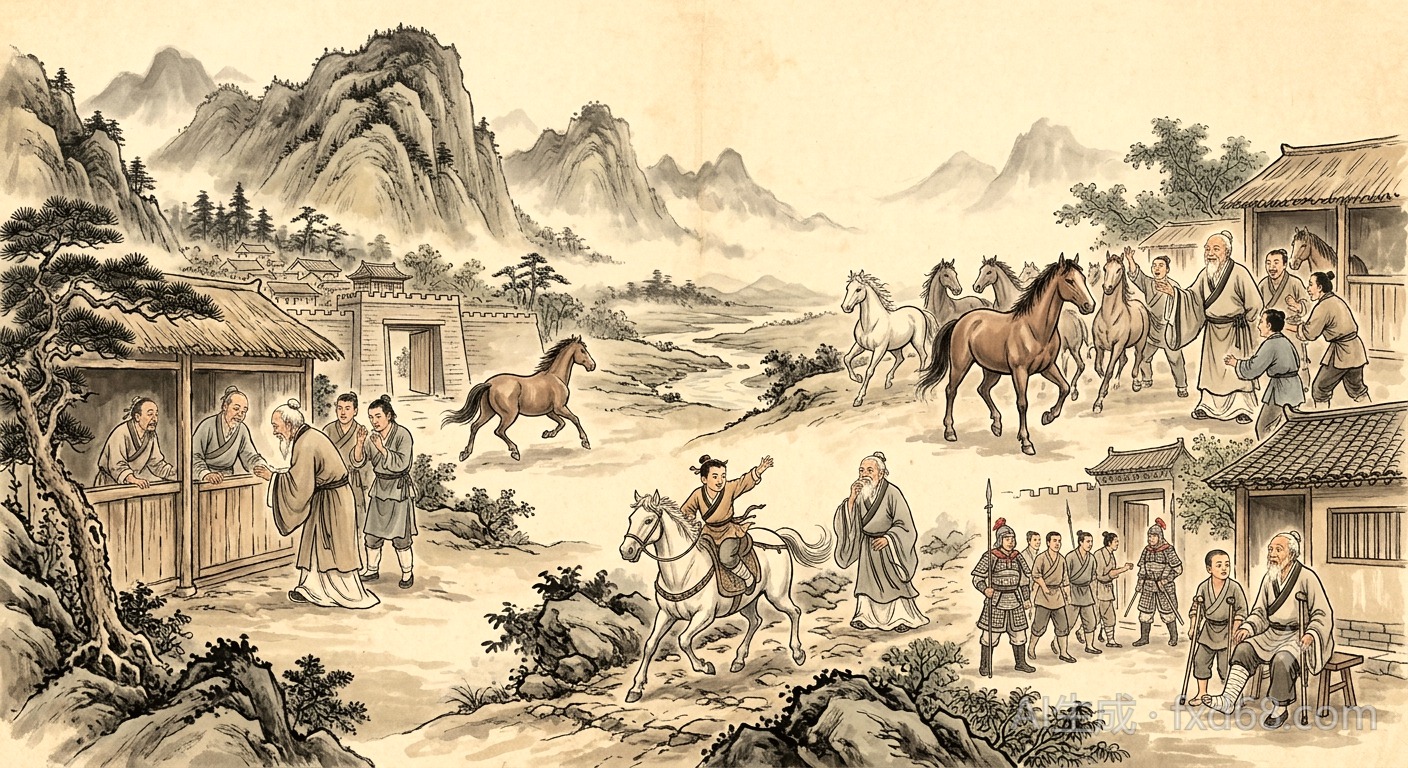
"塞翁失马"出自《淮南子》,是一则流传两千多年的中国经典寓言,讲的是边塞一位老人接连遇到"倒霉事"和"好运事",却始终不急着下结论的故事,后来演变成一句家喻户晓的成语,常常搭配"焉知非福"一起使用。
"The old man at the frontier loses his horse" comes from the ancient Chinese text "Huainanzi," a classic fable told for over two thousand years. It tells of an old man living near the border who repeatedly experienced what seemed like bad luck and good luck, yet never rushed to judge either one. It later became a well-known Chinese idiom, often paired with the phrase "how could we know it wasn't a blessing."
这个成语常常被用来提醒人们,福和祸有时候并不是绝对的,一件看起来倒霉的事,说不定过段时间就变成了好事,反过来也是一样,所以遇到事情不要太早高兴或太早难过。
This idiom is often used to remind people that fortune and misfortune aren't always what they seem, something that looks unlucky today might turn out to be a blessing later, and the reverse is true as well, so it's best not to celebrate or despair too quickly when something happens.
🐴 老人的马跑丢了,他却说这说不定是件好事——
这个故事后来一波三折……
付费解锁完整故事 · 塞翁失马的传说 · 趣味词卡
- 🐴 塞翁失马本期 · NOW
- 🛁 阿基米德与皇冠之谜点击进入
- 🦊 狐假虎威点击进入
- 🕷️ 安纳西与智慧葫芦点击进入
- ❄️ 十二个月点击进入