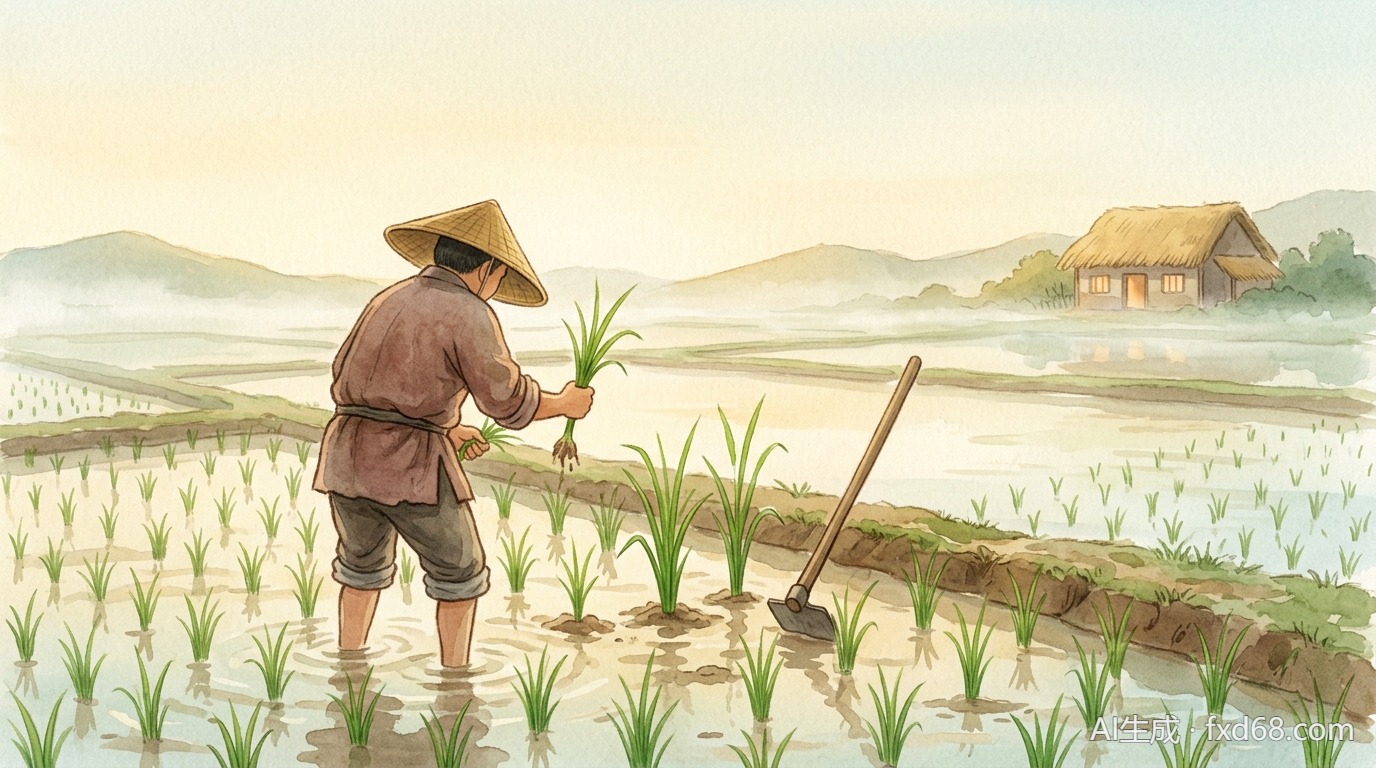
"拔苗助长"出自《孟子·公孙丑上》。孟子是战国时期的思想家,约生活在公元前372年到公元前289年,《孟子》一书记录了他和学生们的对话。原文写的是"揠苗助长","揠"读作yà,就是"往上拔"的意思;后来这个字不常用了,人们就说成"拔苗助长"。原文还留下了一句很有名的话:"天下之不助苗长者寡矣",意思是天下不犯这种错误的人,其实很少。
The idiom comes from the Mencius, in the chapter Gongsun Chou, Part One. Mencius was a thinker of the Warring States period who lived roughly from 372 to 289 BC, and the book Mencius records his conversations with his students. The original text says ya miao zhu zhang, where ya means to pull upward. Later that character fell out of everyday use, so people began to say ba miao zhu zhang instead. The original also leaves us a famous line: there are few people in the world who do not try to help their seedlings grow, meaning that very few of us never make this kind of mistake.
孟子讲这个故事,其实是在回答学生的提问:一个人该怎样培养自己的品格和勇气?他说,要一天一天坚持做正直的事,"勿忘,勿助长":既不能忘了去培养,也不能心急去硬拔。这六个字后来常被老师和家长引用,用来提醒人们,学习和成长都急不得。
Mencius told this story to answer a student's question: how should a person build up good character and courage? He said one must keep doing what is right, day after day, and gave the advice wu wang, wu zhu zhang: do not forget to nurture it, and do not force it to grow. These words have often been quoted by teachers and parents ever since, as a reminder that learning and growing cannot be rushed.
🌱 第一百八十二个故事,一块嫩绿的禾田,一位睡不着觉的急性子农夫,还有一个他自以为绝妙的好主意
付费解锁完整故事 · 完整情景对话 · 趣味词卡
- 🌱 拔苗助长本期 · NOW
- 🐔 小红母鸡点击进入
- 🐢 浦岛太郎点击进入
- 🐭 城里老鼠和乡下老鼠点击进入
- 🦌 鼠鹿过河点击进入