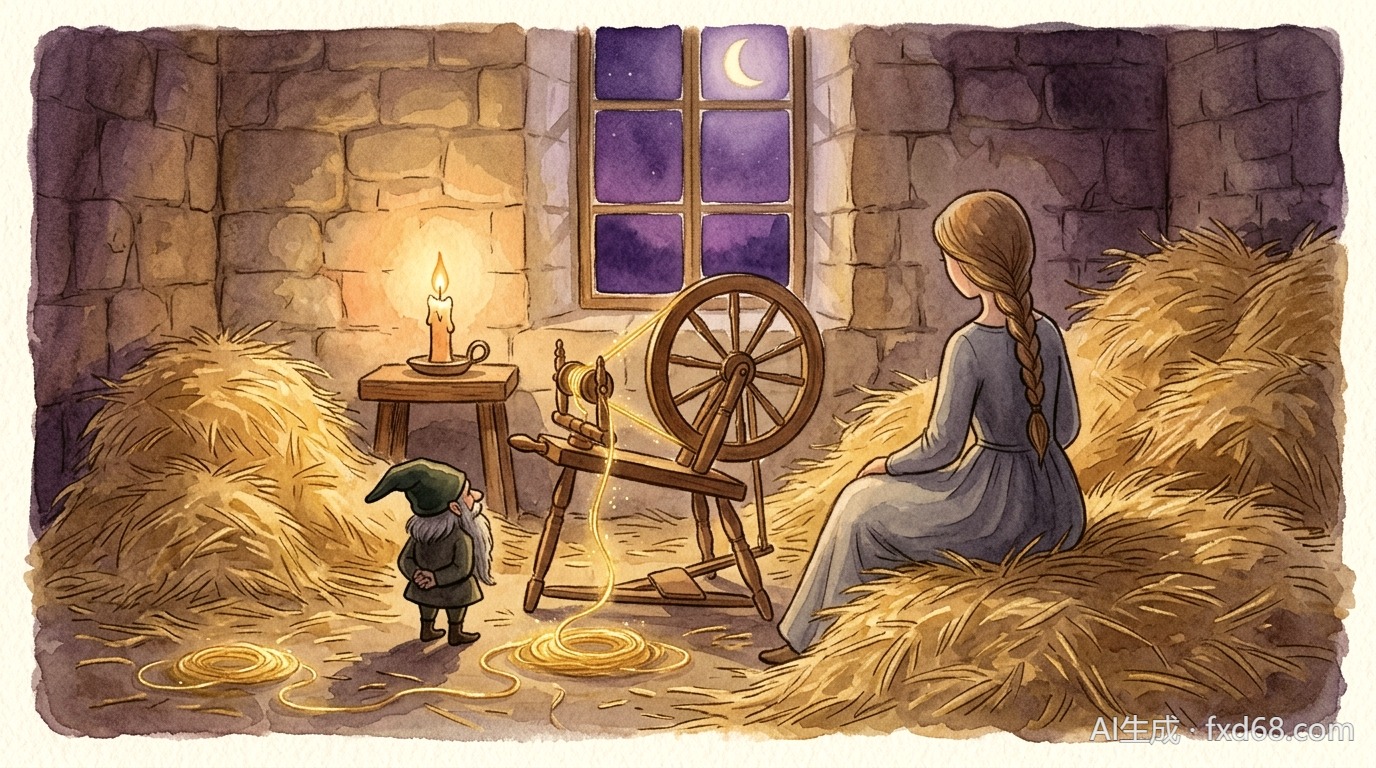
《侏儒怪》收在格林兄弟编的《儿童与家庭童话集》里,是第55篇,1812年的第一版里就已经有了。它的德语名字叫 Rumpelstilzchen,早在1577年,德国作家菲沙特就在书里提到过一个叫 Rumpele stilt 的儿童游戏,人们认为这个名字原本指一种会把房柱弄得砰砰作响、爱捣乱的小精灵。中文译名「侏儒怪」,就是按他矮小古怪的样子起的。
Rumpelstiltskin is tale number 55 in Kinder- und Hausmärchen, the Children and Household Tales collected by the Brothers Grimm, and it was already in the first edition of 1812. Its German name is Rumpelstilzchen. As early as 1577, the German writer Johann Fischart mentioned a game for children called Rumpele stilt, and the name is thought to have first meant a mischievous little goblin that rattles posts and makes noise in the house. The Chinese name, which means dwarf goblin, describes his small and odd appearance.
有意思的是,格林兄弟在后来的版本里改过故事的结尾:1812年版里,小矮人被猜中名字后气冲冲地跑掉,再也没有回来;到了1857年的最后一版,结尾变得激烈得多。我们的故事采用了较早、较温和的结尾。民间故事研究者给这类「猜出神秘帮手名字」的故事编号ATU 500,英国也有一个很像的故事,叫《汤姆·提特·托特》,1890年被民俗学家雅各布斯收进了《英国童话》。
Interestingly, the Grimm brothers changed the ending in later editions. In the 1812 version, once his name is guessed, the little man storms off and never comes back; by the final edition of 1857, the ending had become far more violent. Our story uses the earlier, gentler ending. Folklorists classify tales about guessing the name of a mysterious helper as type ATU 500, and England has a very similar tale called Tom Tit Tot, which the folklorist Joseph Jacobs included in English Fairy Tales in 1890.
🧵 一个爱吹牛的磨坊主,一间堆满稻草的锁着的小屋,一架呼噜噜转个不停的纺车,和一个谁也不知道名字的神秘小矮人
付费解锁完整故事 · 完整情景对话 · 趣味词卡
- 🧵 侏儒怪本期 · NOW
- 🐻❄️ 太阳以东月亮以西点击进入
- 🌱 拔苗助长点击进入
- 🐔 小红母鸡点击进入
- 🐢 浦岛太郎点击进入