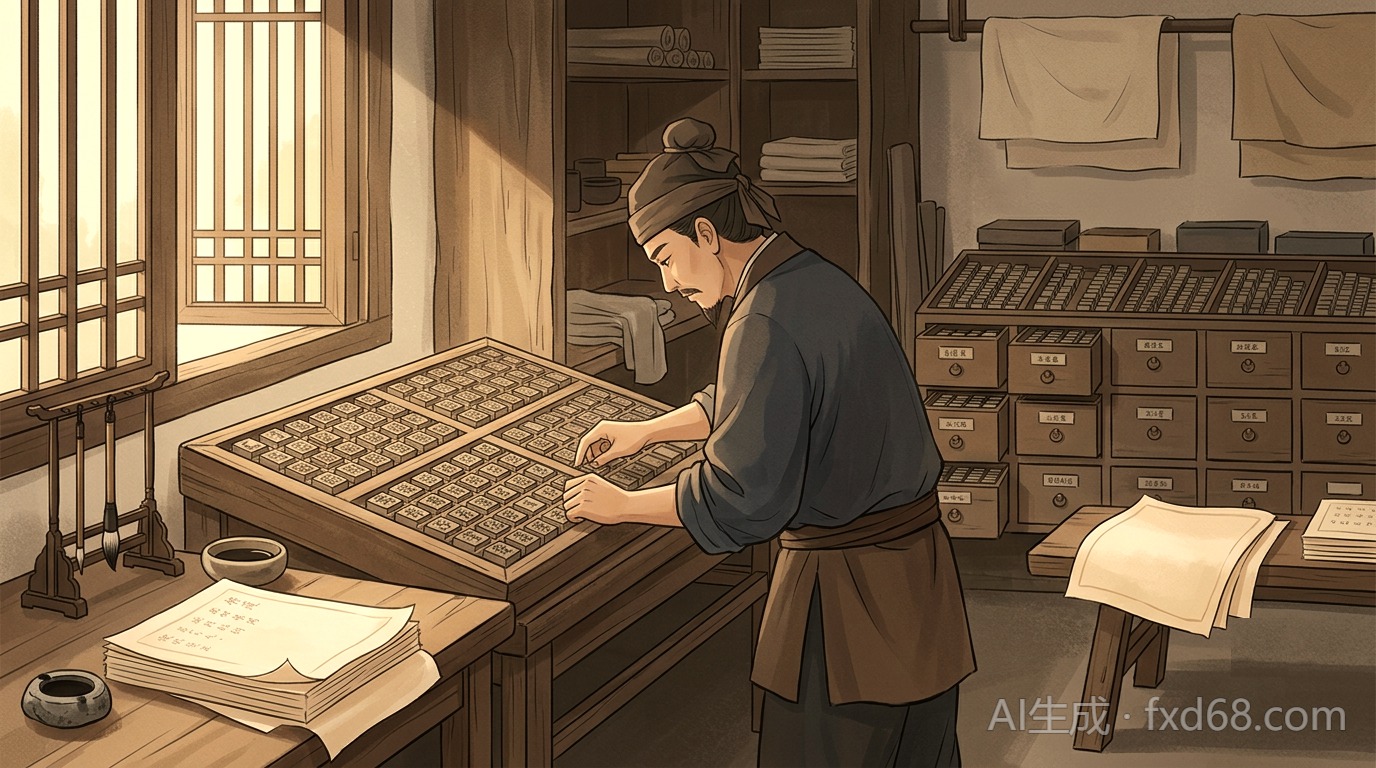
北宋年间,中国的印刷术已经普遍使用雕版印刷——工匠要把整整一页文字,一笔一划刻在一块木板上,刻错一个字,往往就得整块木板重新雕刻。一位名叫毕昇的普通工匠,在长年的印刷工作中,萌生了一个大胆的想法:能不能把每一个字都刻成独立的小活块,需要哪几个字,就挑出来拼在一起,用完之后再拆开,留着下次接着用?
During the Northern Song dynasty, Chinese printing relied on woodblock printing, where an entire page of text had to be carved by hand onto a single wooden block. A single mistake often meant recarving the whole block. Bi Sheng, an ordinary craftsman, came up with a bold idea after years of printing work: what if each character were carved as its own small individual piece, so that whichever characters were needed could be picked out and arranged together, then taken apart afterward and reused the next time?
这个诞生于1040年前后的想法,比欧洲古腾堡的活字印刷机整整早了约四百年。一位天天在雕版房里干活的普通工匠,就这样悄悄改写了印刷的历史。
This idea, born around the year 1040, predated Gutenberg's movable-type press in Europe by roughly four hundred years. An ordinary craftsman who worked in the woodblock workshop every day quietly rewrote the history of printing.
🀄 一格格摆得整整齐齐的小陶块,藏着让中国印刷术领先世界四百年的秘密
付费解锁完整故事 · 活字印刷术的诞生 · 趣味词卡
- ⛵ 大航海时代点击进入
- 🀄 毕昇活字印刷本期 · NOW
- 📜 古腾堡印刷术点击进入
- 🔥 破釜沉舟点击进入
- 🌿 巴德尔之死点击进入