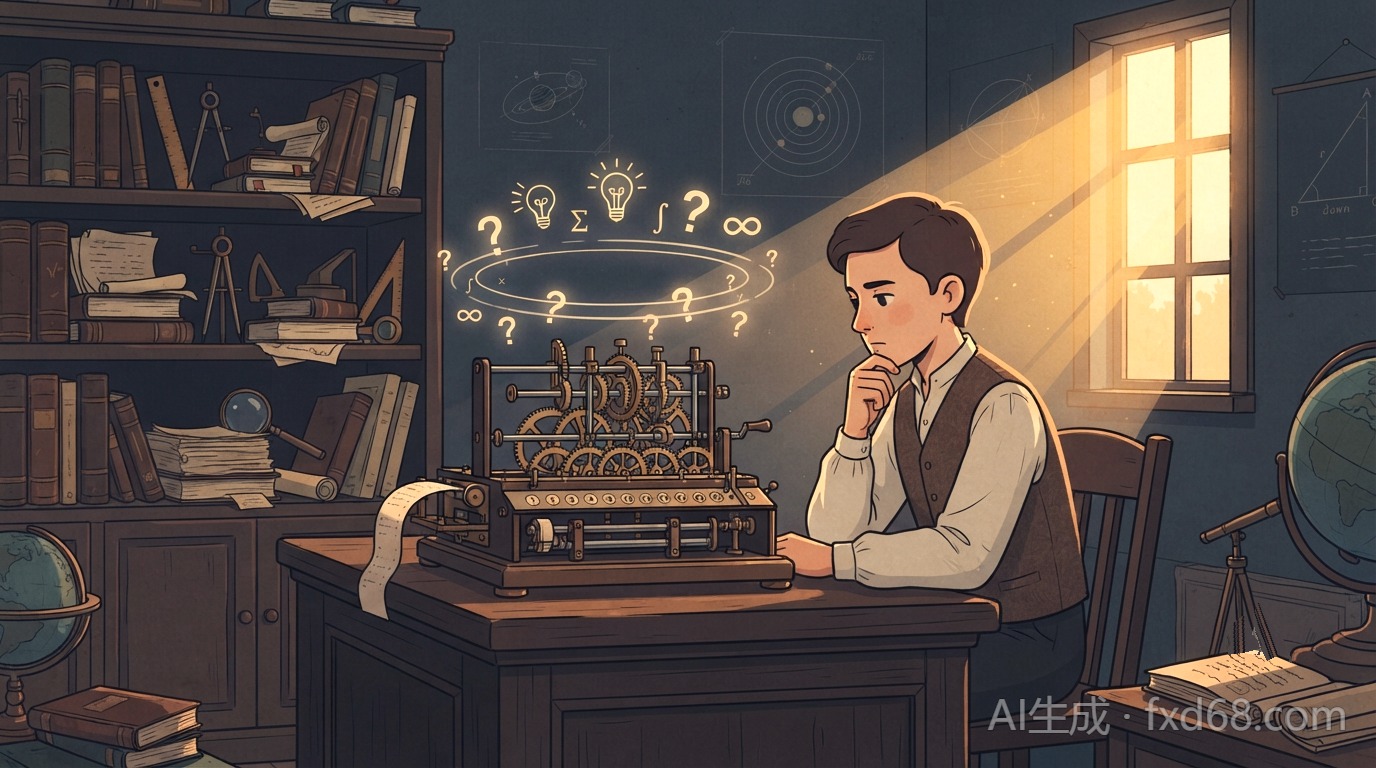
一百多年前,"机器"这个词还只让人联想到锅炉、齿轮和蒸汽。可在1950年,一位英国数学家提出了一个大胆到近乎离经叛道的问题:"机器能思考吗?"这个简单的问题,后来被认为是人工智能这门学科真正意义上的起点。
Over a hundred years ago, the word "machine" only brought to mind boilers, gears, and steam. But in 1950, a British mathematician posed a question so bold it seemed almost heretical: "Can machines think?" This simple question would later be considered the true starting point of the field of artificial intelligence.
这位数学家名叫艾伦·图灵。为了让"机器能不能思考"这个抽象的问题变得可以验证,他设计了一套巧妙的测试方法——如果一台机器能够在对话中,让人分辨不出对方到底是人还是机器,那么这台机器,就可以被认为具备了某种意义上的"智能"。这套方法后来被称为"图灵测试",至今仍是人工智能领域最著名的概念之一。
This mathematician's name was Alan Turing. To make the abstract question of whether machines can think testable, he designed a clever method, if a machine could hold a conversation so convincingly that a person couldn't tell whether they were talking to a human or a machine, then that machine could be considered to possess a kind of "intelligence" in some meaningful sense. This method later became known as the "Turing Test," and remains one of the most famous concepts in the field of artificial intelligence to this day.
💡 一个简单的问题,开启了人工智能这整个新世界
付费解锁完整故事 · 提问的力量 · 趣味词卡
- 🍲 石头汤点击进入
- 💡 人工智能的黎明本期 · NOW
- 🌌 创世神话大对比点击进入
- 🌽 波波尔·乌与玛雅创世点击进入
- ⚡ 马尔杜克与巴比伦创世史诗点击进入