《狮子与老鼠》是最有名的伊索寓言之一,在现代学者佩里整理的伊索寓言编号里是第150号。公元2世纪前后,希腊诗人巴布里乌斯用诗歌重新讲过它;1484年,英国第一位印刷商威廉·卡克斯顿印出了英文版的《伊索寓言》,这个故事也在其中,从此在英语世界的孩子中代代相传。
The Lion and the Mouse is one of the most famous Aesop fables, and it is number 150 in the Perry Index compiled by the modern scholar Ben Edwin Perry. Around the second century AD, the Greek poet Babrius retold it in verse, and in 1484 William Caxton, the first printer in England, published an English edition of Aesop that included this story, so it has been passed down among English-speaking children ever since.
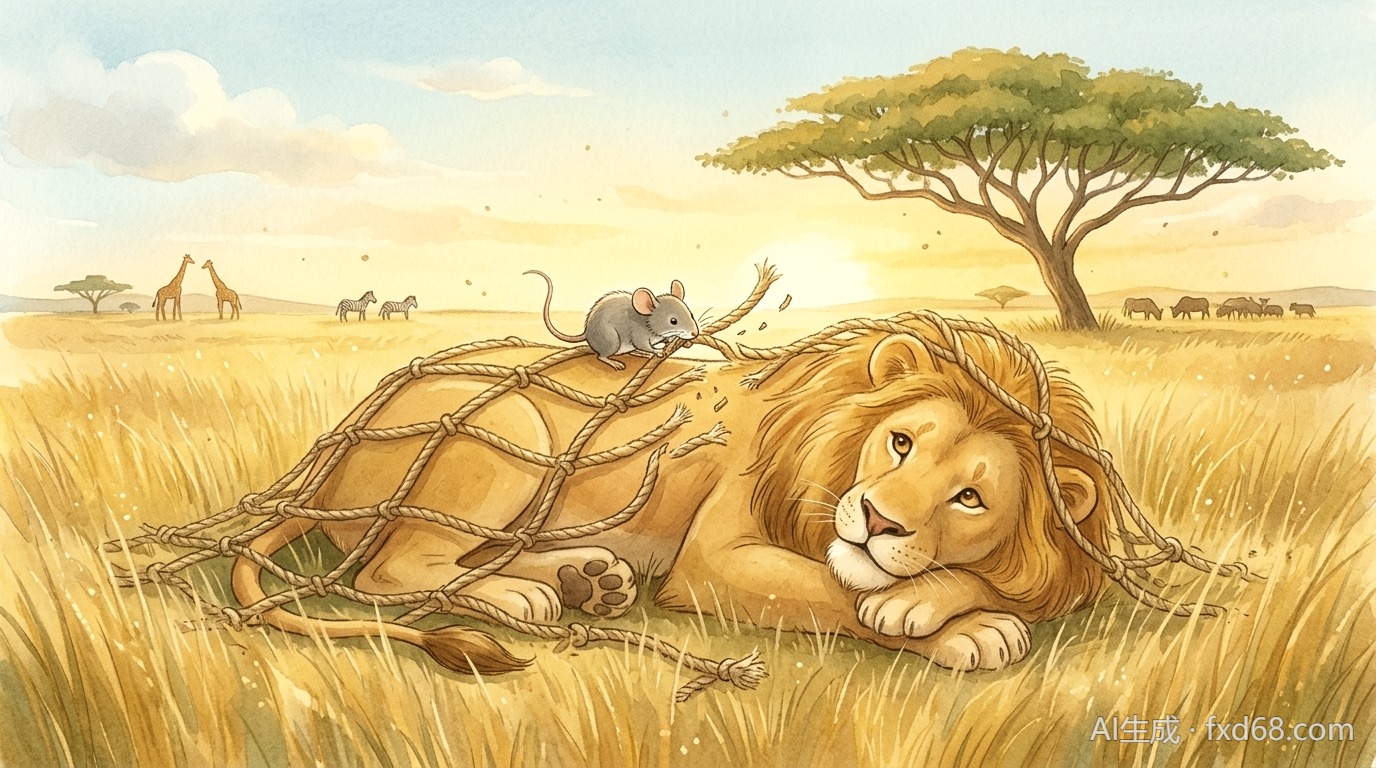
1668年,法国诗人拉封丹把它写进了《寓言诗》第二卷第11篇,题目叫《狮子和老鼠》,诗里有一句很有名的话,大意是:我们常常需要比自己弱小的人帮忙。在不同的版本里,小老鼠救狮子的方法几乎都一样:一点一点咬断绳网。这也成了寓言里最经典的画面之一,被画进了无数本儿童图画书。
In 1668 the French poet Jean de La Fontaine included it as fable 11 of Book 2 of his Fables, under the title The Lion and the Rat. The poem contains a well-known line which means that we often need the help of those smaller than ourselves. In almost every version, the mouse saves the lion in the same way, by gnawing through the net bit by bit, and this has become one of the most classic images in all fables, drawn in countless picture books for children.
🦁 一头在树荫下打呼噜的大狮子,一只不小心跑过它鼻子的小老鼠,一个狮子听了哈哈大笑的承诺,和一张从天而降的绳网
付费解锁完整故事 · 完整情景对话 · 趣味词卡
- 🦁 狮子与老鼠本期 · NOW
- 🧵 侏儒怪点击进入
- 🐻❄️ 太阳以东月亮以西点击进入
- 🌱 拔苗助长点击进入
- 🐔 小红母鸡点击进入