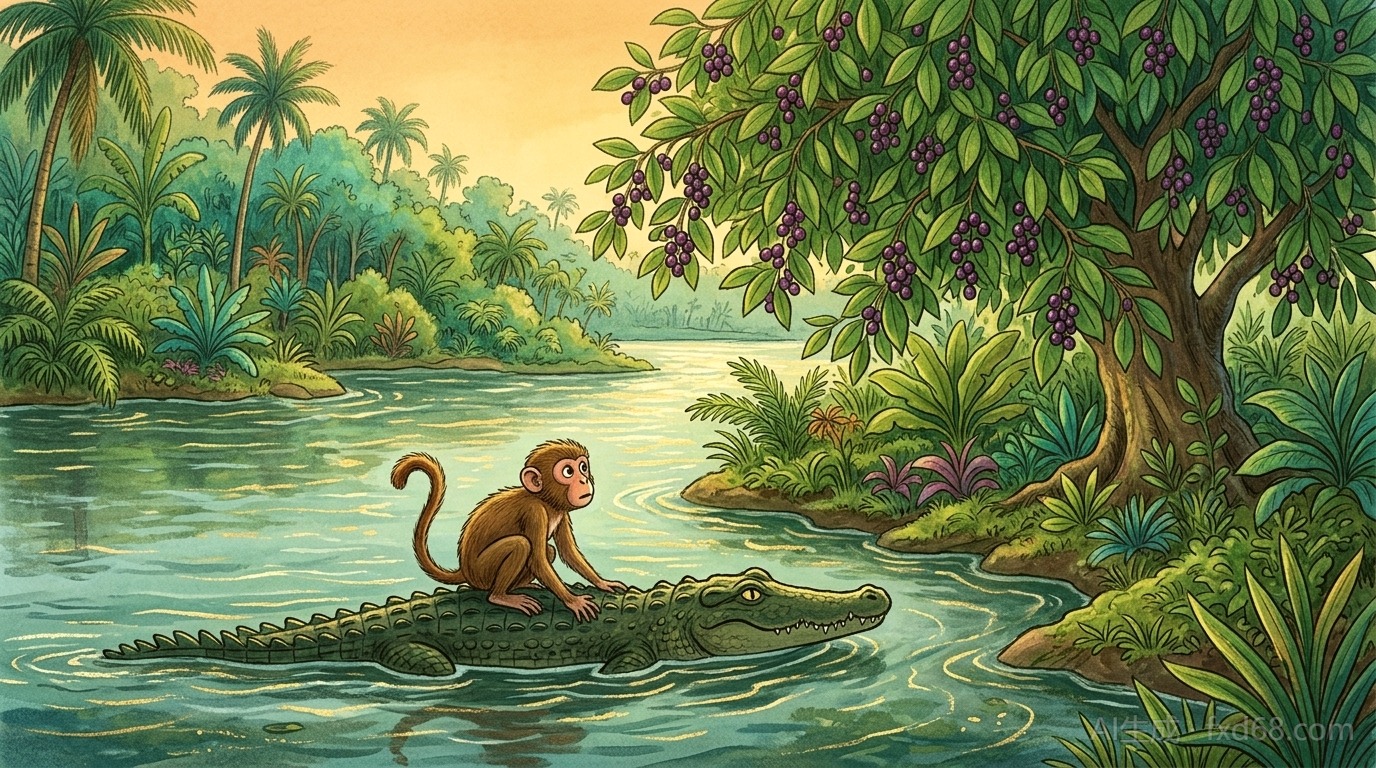
《猴子与鳄鱼》出自印度古老的寓言集《五卷书》(Panchatantra)。相传这本书是一位智慧的老师为了教导几位不爱读书的王子而编写的,用一个个小故事讲明做人处世的道理。书里的故事大多由动物来"演",而且常常一个故事里还套着另一个故事,像俄罗斯套娃一样。
The Monkey and the Crocodile comes from the Panchatantra, an ancient collection of Indian fables. Legend says a wise teacher wrote it to educate some princes who did not like to study, using short stories to teach them how to live and deal with the world. Most of its stories are "acted out" by animals, and one story is often tucked inside another, like a set of Russian nesting dolls.
《五卷书》后来被译成波斯文、阿拉伯文,一路传到了欧洲,据说法国寓言诗人拉封丹写寓言时也从中汲取过灵感。在中国,著名学者季羡林先生曾把它从梵文直接翻译成中文,让中国读者也能读到这部古老的印度寓言集。
The Panchatantra was later translated into Persian and Arabic and traveled all the way to Europe, where the French fable writer La Fontaine is said to have drawn inspiration from it. In China, the renowned scholar Ji Xianlin translated it directly from Sanskrit into Chinese, so that Chinese readers could enjoy this ancient Indian collection too.
🐊 第一百六十六个故事,河边的蒲桃树,一只猴子,一只鳄鱼,和一次河中央的惊险脱身
付费解锁完整故事 · 完整情景对话 · 趣味词卡
- 🐊 猴子与鳄鱼本期 · NOW
- 🍉 西瓜的传说点击进入
- 🍑 桃太郎点击进入
- 🫘 杰克与魔豆点击进入
- 🐇 守株待兔点击进入