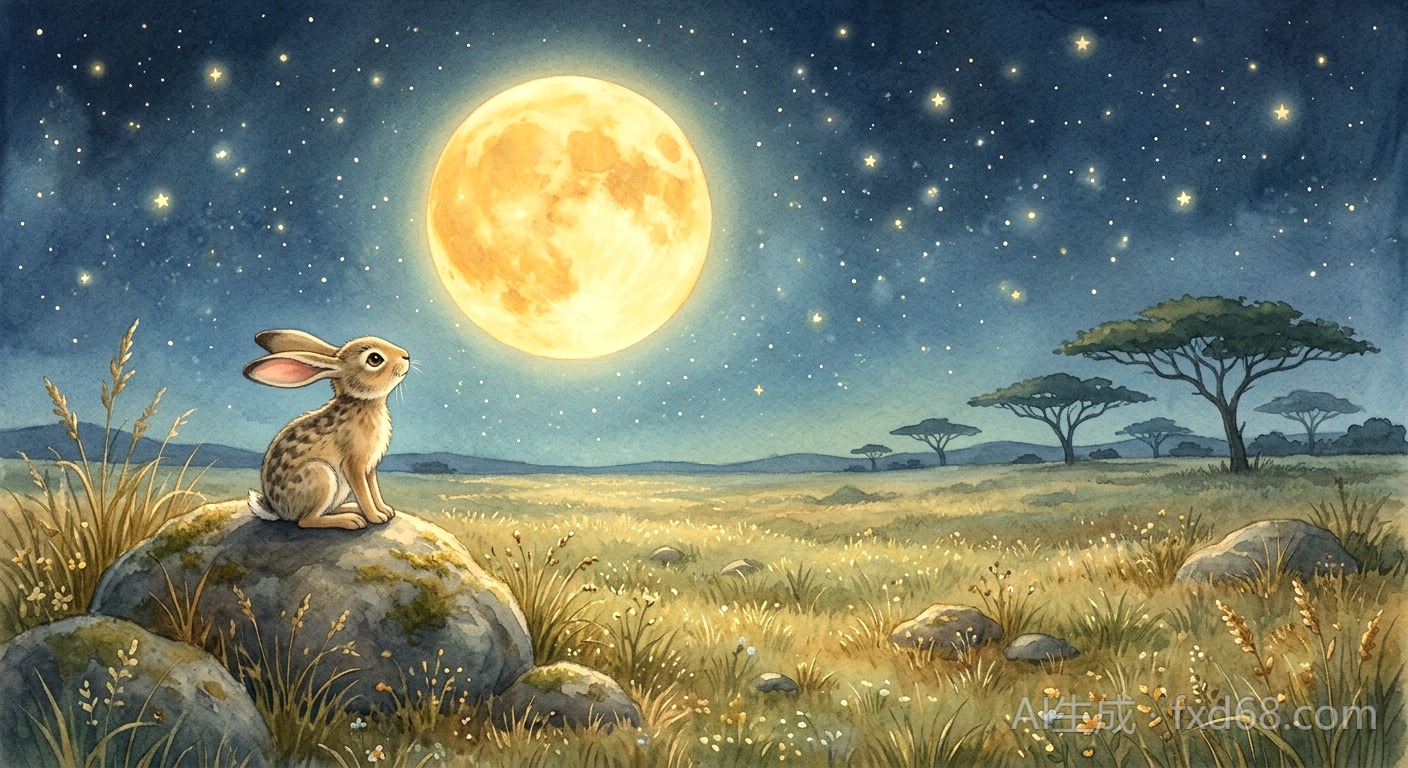
这个故事,来自南部非洲的桑人(也叫布须曼人),他们是世界上历史最悠久的民族之一,世代生活在非洲南部的草原和沙漠里。桑人没有文字,几千年来,所有的知识和故事,全靠一代代人用嘴巴讲、用耳朵听,一点一点传下来——这个关于月亮和野兔的故事,就是这样流传至今的。
This story comes from the San people (also called Bushmen) of southern Africa, one of the oldest peoples in the world, who have lived for generations across the grasslands and deserts of southern Africa. The San had no writing system, so for thousands of years, all their knowledge and stories were passed down purely by speaking and listening, one generation to the next, and this story about the Moon and the Hare has survived down to today in exactly that way.
桑人世代观察夜空,发现月亮总是有规律地圆了又缺、缺了又圆,好像"消失"之后总会再"回来"。这个"月亮与野兔"的故事,就是他们对这个自然现象讲出的解释,也顺便解释了野兔嘴唇为什么会有一道豁口——这类"用故事解释自然现象"的传说,在世界各地的古老文化里都非常常见。
Generation after generation, the San watched the night sky and noticed that the Moon always waxed and waned in a steady rhythm, seeming to disappear and then always come back again. The story of the Moon and the Hare is the explanation they told for this natural pattern, and along the way it also explains why the hare's lip has a small split in it. This kind of story, one that explains a natural phenomenon, is extremely common across ancient cultures all around the world.
🌙 第一百零三个故事,一次没有传对的口信
付费解锁完整故事 · 完整情景对话 · 趣味词卡
- 🌙 月亮与野兔本期 · NOW
- 🏺 司马光砸缸点击进入
- 🎃 小葫芦的选择点击进入
- ⭐ 北极星的故事点击进入
- 🛰️ 寻找地外生命点击进入