鼠鹿"坎吉"(Sang Kancil)是马来西亚和印度尼西亚家喻户晓的故事主角。在马来语里,"坎吉"就是鼠鹿的意思,前面加上"Sang",表示对它的尊称,有点像我们说"某某先生"。据研究,坎吉的故事大约在十五世纪前后就已经流传开来,后来被收进了马来文的《鼠鹿传》。在这些故事里,坎吉个子小、力气小,却总能靠机灵战胜比它强大得多的老虎、大象和鳄鱼。
Sang Kancil, the mouse-deer, is a famous story hero in Malaysia and Indonesia. In Malay, kancil simply means mouse-deer, and the word Sang in front of it is a title of respect, a bit like saying Mister. Scholars believe tales of Kancil were already being told around the fifteenth century, and they were later gathered in Malay collections such as the Hikayat Sang Kancil. In these stories, Kancil is small and weak, yet he always uses his wits to outsmart much stronger animals like tigers, elephants and crocodiles.
鼠鹿是真实存在的动物,生活在东南亚的热带雨林里,它既不是老鼠,也不是鹿,而是一类很古老的小型有蹄动物。小鼠鹿身长大约只有45厘米,体重约2公斤,是世界上最小的有蹄类动物之一。它的学名叫Tragulus kanchil,后半截"kanchil"正是从马来语借来的。雄鼠鹿头上没有角,嘴边却长着两颗小小的獠牙。
The mouse-deer is a real animal that lives in the rainforests of Southeast Asia. It is neither a mouse nor a deer, but an ancient kind of small hoofed animal. The lesser mouse-deer is only about 45 centimetres long and weighs about 2 kilograms, making it one of the smallest hoofed mammals in the world. Its scientific name is Tragulus kanchil, and the word kanchil was borrowed from Malay. Male mouse-deer have no antlers, but they do have two small tusk-like teeth.
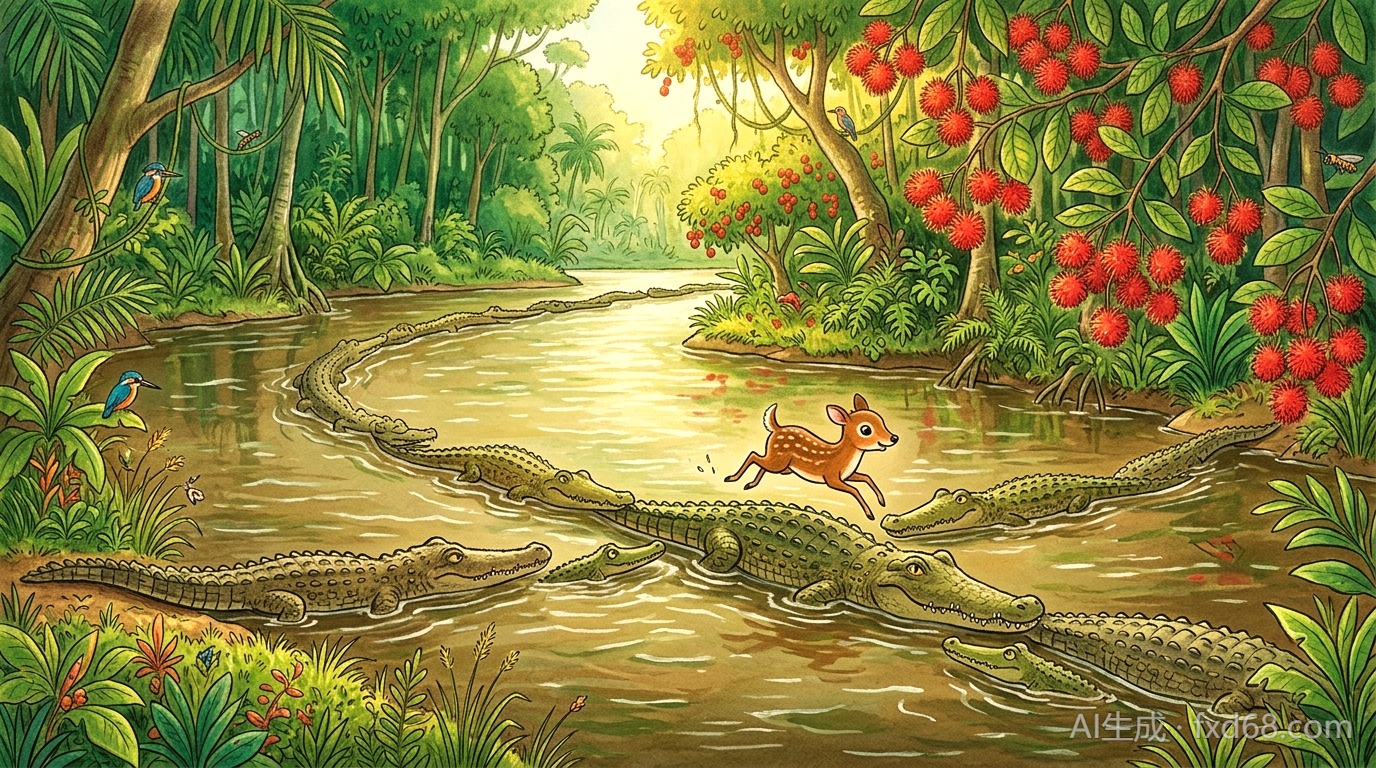
🦌 第一百七十八个故事,一只还没猫高的小鼠鹿,一条满是鳄鱼的大河,还有河对岸红彤彤的红毛丹
付费解锁完整故事 · 完整情景对话 · 趣味词卡
- 🦌 鼠鹿过河本期 · NOW
- 🐸 井底之蛙点击进入
- 🐠 渔夫和金鱼点击进入
- 🍪 姜饼人点击进入
- 🪔 阿拉丁神灯点击进入