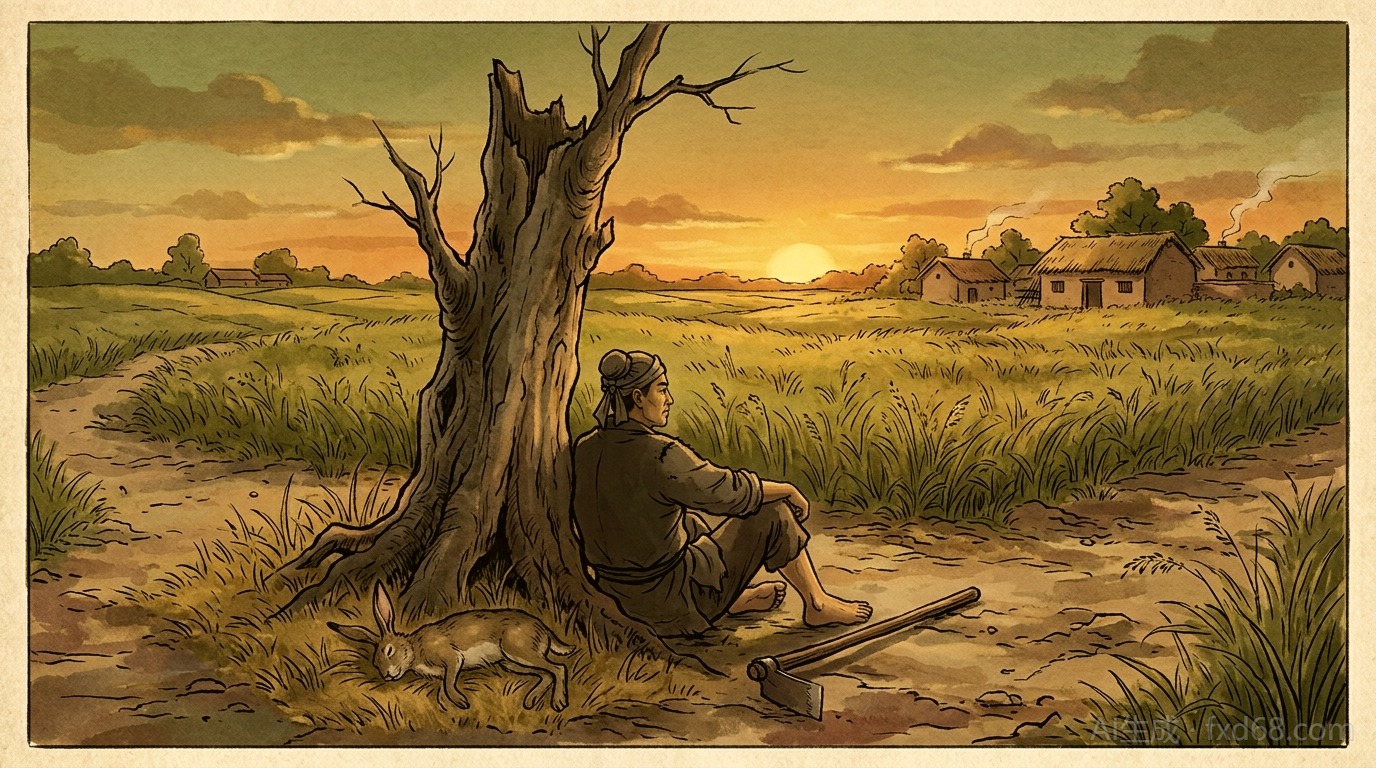
《守株待兔》出自战国末期思想家韩非所著的《韩非子·五蠹》。韩非是法家学说的集大成者,"五蠹"指他认为会危害国家的五类人。他讲这个故事,原本并不是为了劝人勤劳,而是用来批评那些一心想照搬古代帝王的办法来治理当下社会的人——在他看来,时代变了,办法也得跟着变。
The Farmer Who Waited by the Stump comes from "The Five Vermin" (Wudu), a chapter of the Han Feizi, written by the late Warring States thinker Han Fei. Han Fei was the great synthesizer of the Legalist school, and the "five vermin" were five kinds of people he believed were harming the state. He originally told this story not to encourage hard work, but to criticize those who wanted to govern the present by copying the methods of ancient kings — in his view, when times change, methods must change too.
有意思的是,这个成语的意思在两千多年里悄悄发生了变化。韩非当年用它比喻"死守老办法、不懂变通";而今天,人们更多用它来形容不主动努力、只想坐等好运上门。同一个故事,在不同的时代被读出了不同的道理,这正是成语的有趣之处。如今,"守株待兔"已是汉语里最常用的成语之一。
Interestingly, the meaning of this idiom has quietly shifted over more than two thousand years. Han Fei used it to describe clinging to old methods without adapting; today, people mostly use it to describe waiting for good luck instead of making an effort. The same story has taught different lessons in different eras — and that is part of what makes Chinese idioms so interesting. Today, "waiting by the stump for a hare" is one of the most commonly used Chinese idioms.
🐇 第一百六十二个故事,一个树桩,一只兔子,和一个等了很久很久的农夫
付费解锁完整故事 · 完整情景对话 · 趣味词卡
- 🐇 守株待兔本期 · NOW
- 🦚 金苹果树与九只孔雀点击进入
- 🧤 手套点击进入
- 🥕 萝卜点击进入
- 🦉 三只小猫头鹰点击进入