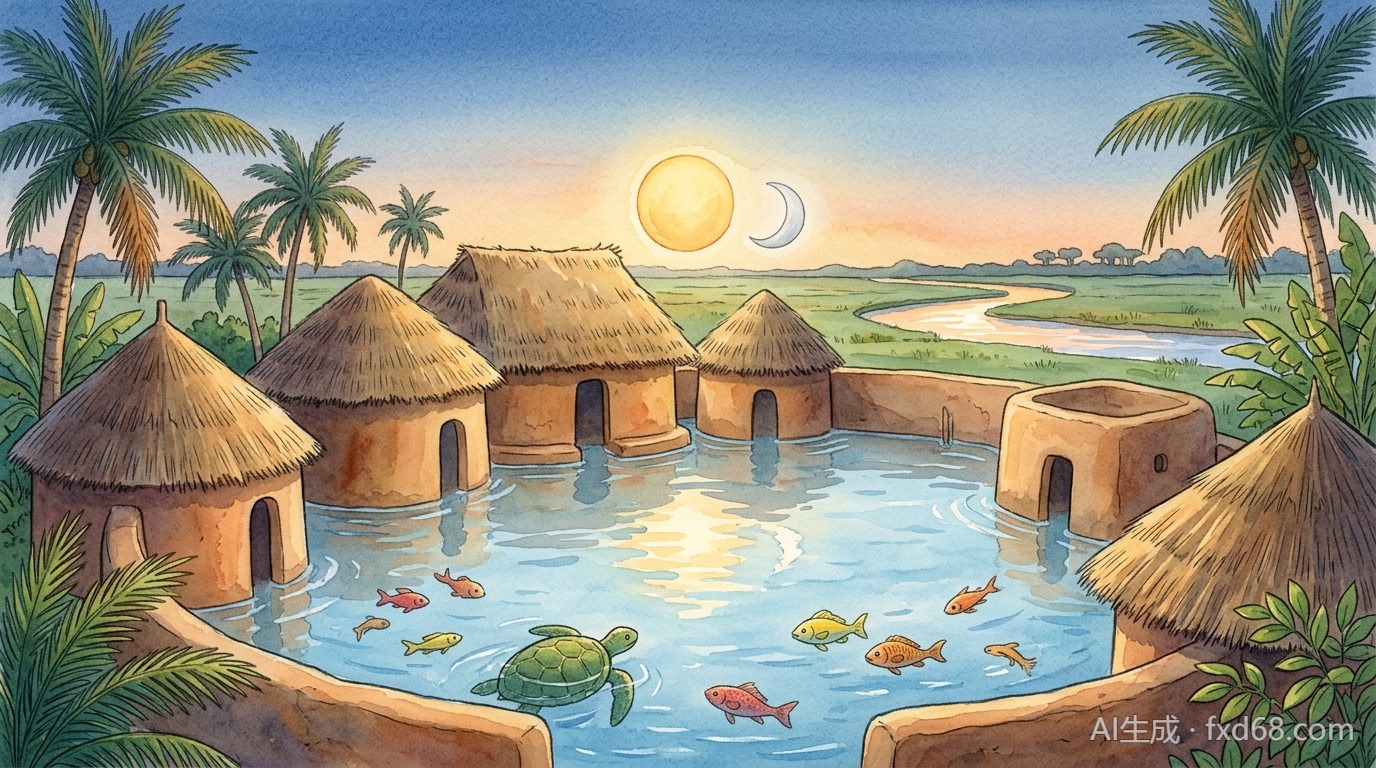
这个故事来自西非尼日利亚东南部的埃菲克人和伊比比奥人,他们生活在今天十字河州的卡拉巴尔一带,那里靠近大西洋,河流和溪水纵横交错。1910年,当时在尼日利亚南部任职的英国官员埃尔芬斯通·戴雷尔,把当地人讲给他听的故事整理成《尼日利亚南部民间故事》一书出版,这个故事就收录在其中。
This story comes from the Efik and Ibibio peoples of southeastern Nigeria in West Africa, who live around Calabar in what is now Cross River State, close to the Atlantic Ocean and crossed by many rivers and creeks. In 1910 Elphinstone Dayrell, a British official then serving in Southern Nigeria, published the stories local people had told him as the book Folk Stories from Southern Nigeria, and this tale is one of them.
「为什么」故事在非洲民间传说里非常常见,它们用想象力解释身边的自然现象,比如动物为什么长成这个样子、天上为什么有太阳和月亮。1968年,美国画家布莱尔·伦特根据戴雷尔的记录,为这个故事画了一本图画书,第二年获得了美国凯迪克奖的荣誉奖,让它在世界各地的孩子中流传开来。
Why stories are very common in African folklore. They use imagination to explain natural things around us, such as why an animal looks the way it does or why there is a sun and a moon in the sky. In 1968 the American artist Blair Lent illustrated a picture book of this story based on the Dayrell text, and the next year it received a Caldecott Honor in the United States, helping the tale spread among children around the world.
☀️ 一位好客的太阳,一位笑眯眯的月亮,一座盖了好久好久的大院子,和一位带着全家来做客的老朋友:水
付费解锁完整故事 · 完整情景对话 · 趣味词卡
- ☀️ 太阳和月亮为什么住在天上本期 · NOW
- 🐈 穿靴子的猫点击进入
- 🐉 叶公好龙点击进入
- 🐸 青蛙王子点击进入
- 🦁 狮子与老鼠点击进入